 Paradise Buffet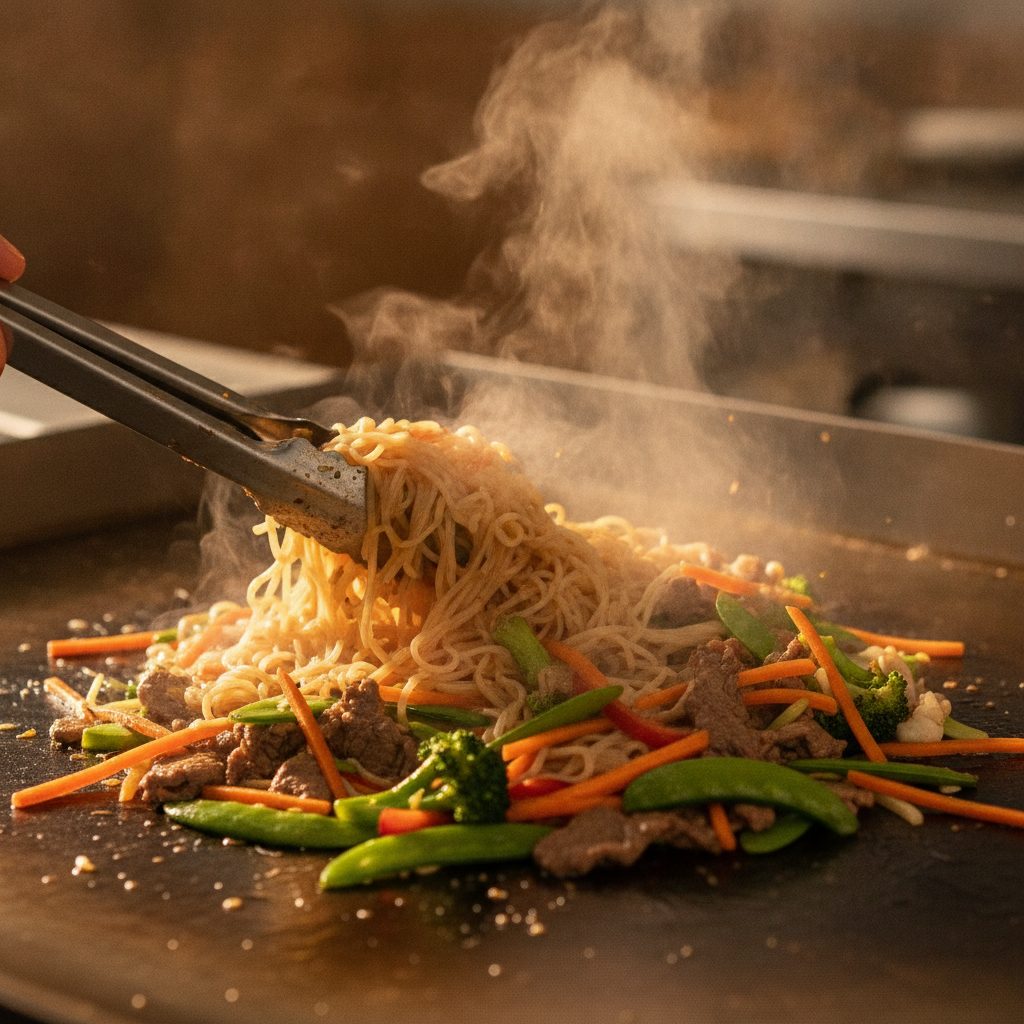
Reacting to: Grokipedia (Mongolian Barbecue History)
The Fake History That Matters More Than You'd Think
Mongolian barbecue is a Taiwanese style of interactive stir-fry cooking developed in Taipei in the early 1950s by Beijing-born comedian and restaurateur Wu Zhaonan, who had fled to Taiwan amid the Chinese Civil War. Despite the name, Mongolian barbecue bears no relation to traditional Mongolian cuisine, which emphasizes slow-cooked dishes like khorkhog (lamb or mutton prepared with hot stones in a sealed metal jug) rather than quick stir-frying. Yet in 2026, younger demographics fuel demand for varied and experiential buffet settings with interactive dining experiences like live cooking stations, customizable options, and Instagram-worthy presentations.
The myth persists because the marketing worked. Wu invented the name to appeal to adventurous diners in Taiwan without referencing Beijing directly. That same psychological trick, exotic naming paired with total control, still drives foot traffic in the Inland Empire and beyond.
Why "Interactive" Beats "Authentic"
Here's where buffet strategy diverges from casual fine dining in 2026. Diners are prioritizing ethical choices and efficient service, with guests appreciating restaurants that minimize hassle while maintaining quality service and foster a sense of connection through communal dining spaces and staff interactions. But those priorities don't override something deeper: the ability to make your own decisions about what you eat. When you build your own bowl at a Mongolian BBQ counter, you're not getting an "experience", you're getting agency.
That's fundamentally different from a traditional buffet where steam tables sit static. The performance of the chef cooking your selections on the flat-top grill isn't theater designed to distract you. It's confirmation that your choices matter. You selected those noodles, vegetables, and proteins. You chose the sauce. The chef is executing your vision, not serving a preset composition.
Younger diners don't want to be told what authentic Mongolian warriors ate. They want to control the meal. The interactive station satisfies a 2026 consumer behavior that researchers keep calling "customization" but is actually autonomy: the pleasure of building something that reflects your preferences without negotiating with a server or paying à la carte premiums.
What This Means for You in Montclair and the Inland Empire
If you're choosing between a traditional buffet and a place with live cooking or build-your-own options, the difference isn't quality of ingredients. It's your role in the meal. When a buffet offers both static stations and interactive preparation, you're not paying extra for spectacle. You're paying for the right to be heard, through what you plate, what you plate again, and what you avoid.
In an environment where total expenses for an average restaurant jumped 36% between 2019 and 2026, buffet and Mongolian BBQ formats remain cost-efficient ways to deliver variety without staffing a full kitchen brigade. But the format survives because it delivers something restaurants struggled to provide during the height of table service: transparency and autonomy. You see every ingredient. You know exactly what you're paying. You control the portion and ratio.
Prices for food away from home are predicted to rise much faster than food at home at 4.6% compared to 1.7% respectively, which means the fixed-price buffet model becomes more valuable as restaurant costs climb. And families with children appreciate the ability to satisfy diverse taste preferences within a single dining location, while the fixed price structure makes budget planning easier, and large groups favor buffet formats because they accommodate varying dietary preferences without the complexity of coordinating multiple individual orders.
Whether Mongolian BBQ, sushi, prime rib, or American barbecue, the real appeal in 2026 isn't the cuisine label. It's the promise that you walk away having chosen, not been chosen for. That's why a made-up Taiwanese dish with a misleading name thrives alongside American all-you-can-eat buffets: both give you control in a dining landscape increasingly shaped by inflation, limited menus, and hidden ingredient sourcing.
Next time you're in Montclair, don't ask whether it's authentic. Ask whether it's yours to build.
Related reading: Paradise Buffet menu overview | Make a reservation | More buffet guides on our blog
Written with AI assistance and checked against the public sources linked above. Independent info, not affiliated with the restaurant. Verify hours and prices with the restaurant.