 Paradise Buffet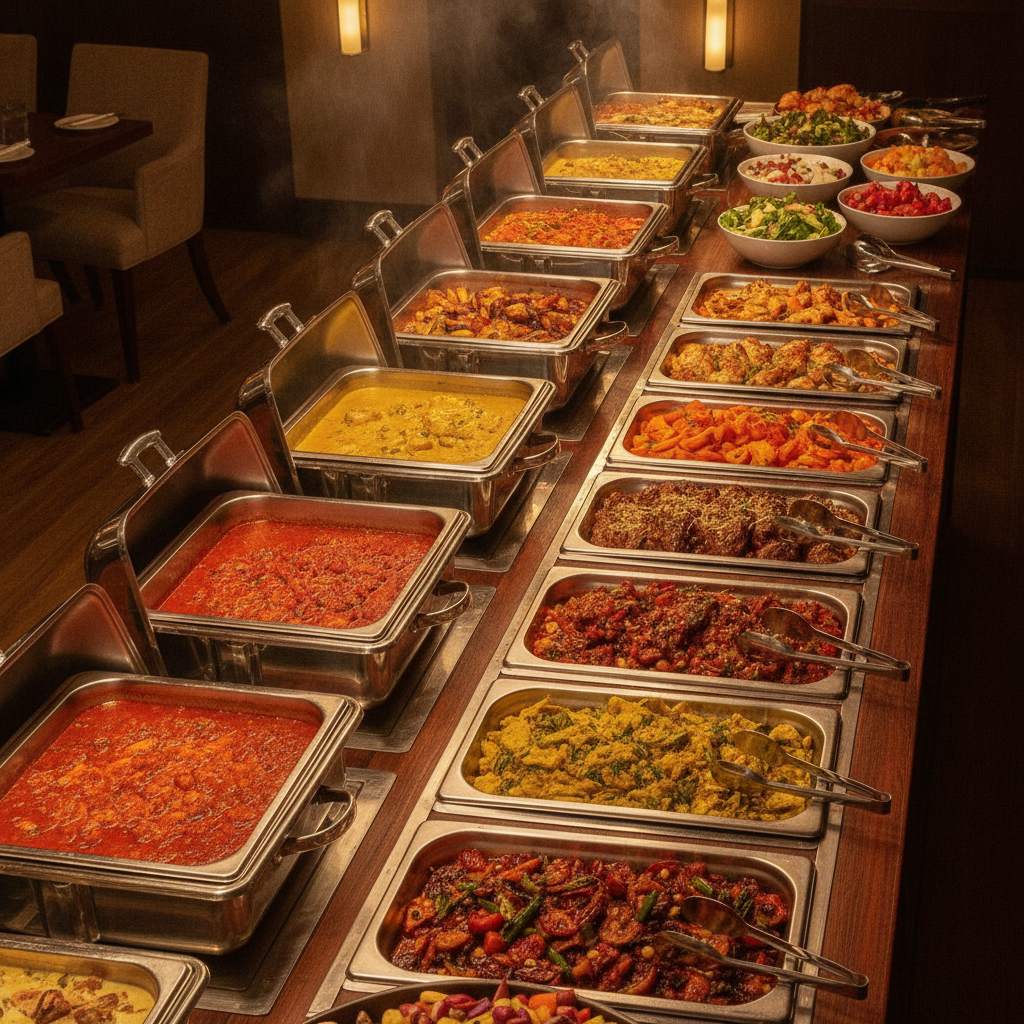
The Trigger: A Massive Shift in How Families Dine Out
According to Yelp's 2026 Trends Forecast, buffet searches surged 252%, with Indian buffet searches climbing 459%. The mainstream narrative is clear: Americans are squeezing budgets and fleeing overpriced sit-down menus. The data seems to support it. In California, a budget restaurant meal costs $16.50 while cooking at home averages $4.27, a stark gap that drives people toward all-you-can-eat. But if it were purely about price, the surge tells a much smaller story than what's actually happening.
Why Price Alone Doesn't Explain the Buffet Boom
Yes, buffets are cheaper per person than table service, but they're not the cheapest option. A taco truck or deli sandwich costs less and gets you fed faster. A fast-casual chain offers predictable portions and controlled spending. Yet families aren't flocking to those. They're looking for buffets specifically, which suggests something else is at work.
The real appeal is agency without negotiation. At a traditional restaurant, one person orders for the table. Kids balk at choices. Parents compromise. Someone leaves hungry or stuck with something they didn't want. At a buffet, everyone walks the line themselves. A picky eater finds what works. A teenager can load a plate differently from their parent. Nobody has to defend their choice or apologize for changing their mind mid-meal. That freedom, repeated across millions of searches, is the real draw.
Speed matters too, especially in the Inland Empire and Montclair where commutes are long and work schedules are tight. Buffet ordering is parallel, not serial. There's no wait for each plate to be plated, no back-and-forth with servers. You walk in, you load up, you sit. Twenty minutes later you're done. For working families, that's worth more than $2 in savings.
What This Means for You as a Diner in Southern California
If you're considering a buffet visit, recognize what you're actually paying for. You're not buying food volume or deep discounts. You're buying speed, choice, and the ability to feed people with different appetites at the same table. That's valuable, especially on a weeknight.
This also means being honest about value. If you tend to eat the same things over and over (pasta, rice, a protein, maybe one side), a buffet isn't saving you money. Order à la carte. If you have multiple kids, a partner, and aging parents with different dietary preferences at one meal, a buffet makes sense. The perceived "savings" is actually the savings in negotiation time and the freedom to satisfy everyone.
The surge also suggests buffets will stay in the market. Operators are seeing the data. If you enjoy this format, now is the time to visit your regulars, because restaurants are investing in buffets again based on this trend. That's a good sign for consistency and menu quality. It also means you should check the menu rotation before you go, and consider making a reservation if you're bringing a large group, popularity creates wait times.
Finally, the buffet boom reveals what Americans have been quietly signaling for years: we're tired of restaurants making choices for us. We want control. We want speed. We want to feed our families without friction. The price is secondary. Next time you see a buffet, you'll know you're not just choosing the cheap option, you're choosing the option that lets you decide.
Visit Paradise Buffet or contact them to confirm current hours and menu details before your visit.
Written with AI assistance and checked against the public sources linked above. Independent info, not affiliated with the restaurant. Verify hours and prices with the restaurant.