 Paradise Buffet
Reacting to: Fox News
The Headline Gets It Halfway Right
Americans are tightening budgets and experiencing menu price fatigue, heading to buffets, and Yelp found that searches for all-you-can-eat buffet near me surged 252%. Fair enough. But here's what the news reports leave out: this isn't just people scrounging for the cheapest meal. If it were purely about price, they'd all be eating fast food dollar menus. Instead, Indian food buffet searches jumped 459%, which tells a different story entirely.
Choice and Control Are Worth More Than Savings Alone
The real driver is autonomy. At a standard restaurant, someone else decides your portion size, your plate composition, and whether you get a second helping of what you actually want. You order one dish. That's it. A buffet flips that script: you design your own meal, you taste five cuisines in one sitting, you can adjust on the fly if something isn't hitting right. That's not penny-pinching behavior; that's a different value proposition altogether.
Yes, cost matters. The cost of eating out at an inexpensive California restaurant was $16.50, versus $4.27 to eat at home, a difference of $12.23. A buffet sits somewhere in between that math, and for a family or group, it's hard to beat. But what makes buffets click in 2026 is that people are also explicitly rejecting the feel of being trapped by a menu, by portion theater, by the power imbalance of ordering and hoping. At a buffet, you're in charge. That matters more to people right now than we're giving credit for.
What This Means If You're Dining in Montclair or the Inland Empire
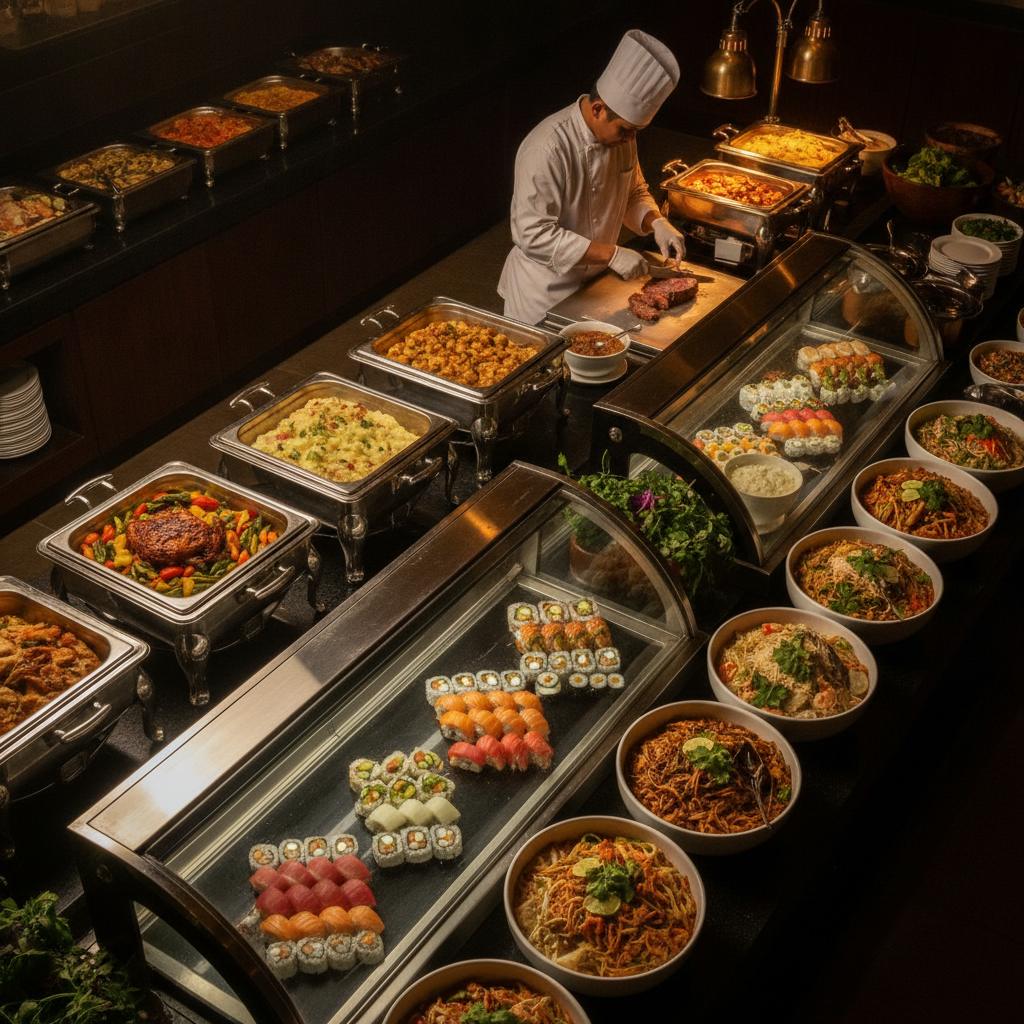
If you live or work in San Bernardino, Riverside, or the greater LA industrial corridor, buffet restaurants are one of the few formats that still offer real variety at a sane price without you feeling like you're gambling with your wallet or your appetite. Paradise Buffet's combination of American, Asian, Mongolian BBQ, and sushi stations gives you flexibility across multiple culinary zones. That's not cheap by absolute dollars; it's valuable because you're not ordering blind and hoping the kitchen nails one dish.
The 252% surge also signals that buffet restaurants that have stayed open and maintained quality standards are about to be busier. If you're considering a visit, making a reservation or going at off-peak times (weekday lunch rather than weekend dinner) will give you a better experience than showing up cold to an understaffed station. The revival is real, and demand is climbing.
Diners in this region also benefit from buffets being less trendy-dependent than specialized restaurants. A Korean BBQ spot or a specialized sushi counter lives or dies by a narrow audience and a narrow menu. A buffet that covers multiple cuisines can serve families with different tastes, groups with dietary splits, and people who just want to graze without the awkwardness of ordering separately. That's survival-level utility in a working-class region where dining budgets are tight and logistics matter.
The shift isn't about choosing cheap over good. It's about choosing control and variety over single-point-of-failure dining. That's a sophistication that gets buried under "Americans just want to save money" takes. You're not wrong about the savings; you're just missing what people actually value.
Related: Events · More guides
Written with AI assistance and checked against the public sources linked above. Independent info, not affiliated with the restaurant. Verify hours and prices with the restaurant.